

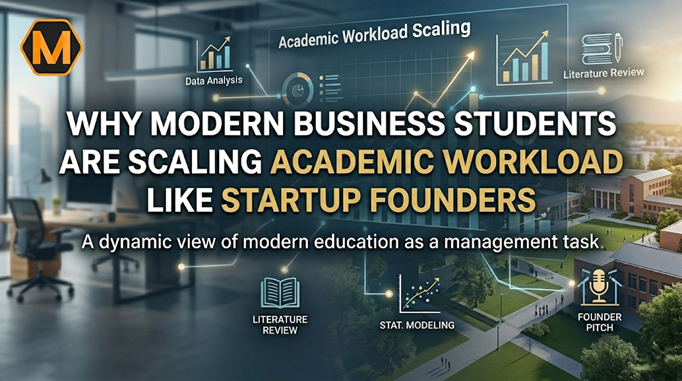
The modern educational landscape has shifted. No longer is a university degree just about attending lectures and passing exams; it has become a high-stakes environment where students act more like entrepreneurs than passive learners. In the business world, a founder’s success is often determined by their ability to delegate, prioritize, and manage resources efficiently. Today’s business students are adopting this exact mindset. They aren’t just “studying”—they are managing a portfolio of responsibilities that includes networking, internships, side hustles, and heavy academic requirements.
To stay ahead, these students are looking for ways to optimize their time. When the volume of research papers and case studies becomes overwhelming, many choose to leverage professional assignment assistance to ensure their grades remain competitive while they focus on high-impact networking and professional development. This isn’t about avoiding work; it’s about strategic allocation of energy, a core principle taught in every MBA program around the globe.
The Pivot: From Student to Academic CEO
In a startup, the “CEO” (the student) is responsible for the vision and growth. However, doing every single task manually—from data entry to administrative filing—stunts growth. In the academic world, the “administrative filing” often looks like repetitive essay formatting or basic literature reviews.
By “outsourcing” the more mechanical aspects of their curriculum, students can pivot their focus toward “Product Development”—which, in their case, is their career readiness. They are spending more time in incubators, attending industry seminars, and building LinkedIn profiles that attract recruiters before they even graduate. This transition from a traditional learner to an academic manager is what separates the high-achievers from those who are simply burnt out.
Strategic Resource Allocation
The most successful startup founders know they can’t be experts in everything. They hire specialists for legal, finance, and marketing. Similarly, a business student might be a marketing genius but struggle with the complex statistical modeling required for a finance module.
Instead of letting one weak area sink their entire GPA, they treat their semester like a project pipeline. They identify bottlenecks early. If a specific module consumes 80% of their time but only accounts for 10% of their future career value, they find ways to streamline that process. This allows them to maintain a “Global Tone” in their professional interactions, appearing well-rounded and capable of handling diverse challenges without being bogged down by a single hurdle.
Managing the “Capstone” Project: The Thesis Challenge
As students move into their final years, the complexity of their “startup” increases. The thesis or final dissertation is the ultimate “Series A” funding round—it is the culmination of years of work and the gateway to professional accreditation. However, the sheer volume of data synthesis, primary research, and academic rigor required for a thesis can paralyze even the most organized student.
| Task Category | Focus Area | Impact Level |
| Networking | Industry Connections | High (Long-term) |
| Internships | Real-world Skill | High (Immediate) |
| Daily Assignments | Routine Grading | Medium |
| The Thesis | Graduation/Specialization | Critical |
When the pressure of a final project threatens to derail their career momentum, students often look for specialized expertise. This is where high-level academic support becomes a game-changer. For example, opting to have a professional from MyAssignmentHelp do my thesis for me allows a student to ensure the technical structure and citations are flawless, while they focus on the core arguments and real-world applications of their research. It ensures that the “final product” presented to the examiners is of professional-grade quality.
The Role of Technology and Global Collaboration
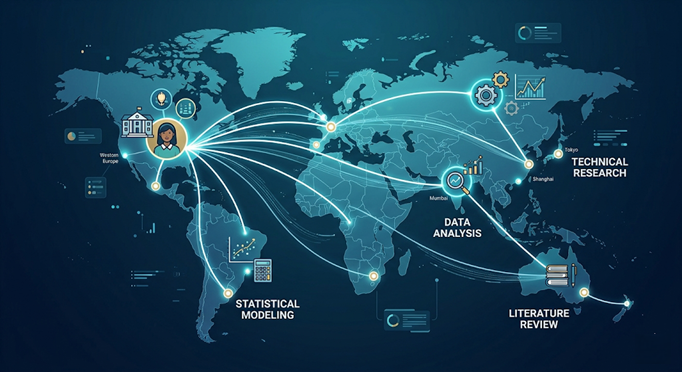
We live in a hyper-connected era where “local” is no longer the limit. Startup founders hire talent from across the globe to get the best results. Undergraduate students are doing the same. By using online platforms, they are collaborating with tutors from different time zones, gaining diverse perspectives that a single classroom might not provide.
This globalized approach to learning prepares them for the modern workforce. They become comfortable managing remote teams, using digital project management tools, and communicating across cultural barriers. The tools they use to survive university are the very same tools they will use to thrive in a multinational corporation or their own future business.
Why Quality Matters Over Quantity
In the world of SEO and business, “thin content” fails. The same is true for academics. Turning in ten mediocre papers is less valuable than turning in five exceptional ones and using the saved time to lead a student organization.
Modern students are focusing on “Information Gain.” They want to produce work that actually contributes to their field. By freeing up their schedule from the “busy work” of manual citations and basic formatting, they can dive deeper into original thought. This leads to higher engagement with professors and a more profound understanding of their chosen industry.
Conclusion: The New Academic Standard
The “Founder Mentality” is here to stay. Education is no longer a linear path of reading and repeating; it is a complex management task. By viewing their degree through the lens of a startup, students are learning the most valuable business lesson of all: how to manage a limited supply of time to achieve a maximum level of output.
Leveraging external support, using data-driven tools, and prioritizing high-impact tasks aren’t shortcuts. They are the hallmarks of a modern professional who understands that in the 21st century, the way you work is just as important as the work you do.
Frequently Asked Questions (FAQ)
1. Is it common for business students to use academic support services?
Ans: Yes. As the competitive nature of global business education increases, many students use support services to manage high workloads, especially when balancing jobs or internships alongside their studies.
2. How does the “Founder Mentality” help after graduation?
Ans: It teaches students about delegation, time management, and the importance of focusing on high-value tasks. These are essential leadership skills that employers look for in management trainees and entrepreneurs.
3. What is the benefit of outsourcing a thesis?
Ans: A thesis requires specialized knowledge in research methodology and academic formatting. Professionals can ensure the technical aspects are perfect, allowing the student to focus on the practical implications of their study.
4. Does using support services affect learning?
Ans: When used correctly as a supplement, it can actually enhance learning. By seeing how experts structure arguments and cite sources, students can improve their own writing and analytical skills over time.
5. Why is time management considered the most important skill for a student?
Ans: Time is the only non-renewable resource. In business, being “first to market” or “most efficient” is a competitive advantage. Students who master this early are better prepared for the fast-paced corporate world.
About The Author
I am Thomas Taylor, a senior content strategist and academic consultant at MyAssignmentHelp, where I specialize in bridging the gap between classroom theory and real-world application. With a background in business analytics and a passion for student-centric digital literacy, I focus on helping undergraduates navigate the complexities of modern higher education.