

The world of engineering is no longer just about drafting tables and physical calculators. Today, your success depends on how well you navigate a complex digital ecosystem. While most universities introduce students to the heavyweights early on, mastering just two programs isn’t enough to survive the rigorous demands of a modern degree. To truly excel, you need a toolkit that handles everything from project management to intricate numerical analysis.
Australian engineering standards are high, and the competition in the job market is even higher. Students who graduate with a broad command of various software programs find themselves at a significant advantage. This guide explores the secondary, yet vital, tools that bridge the gap between classroom theory and professional practice.
The Evolution of the Digital Engineer
In the past, an engineer’s primary focus was on the physical integrity of a design. Now, we use software to simulate environments, predict failures, and manage massive datasets before a single brick is laid or a circuit is soldered. While CAD remains the backbone of design, the surrounding software landscape has grown immensely.
When you find yourself overwhelmed by the sheer volume of technical reports and design documentation, utilizing a professional assignment writing service australia can provide the breathing room needed to focus on mastering these essential tools. Balancing software proficiency with academic writing is the hallmark of a well-rounded student.
1. Structural Analysis and Simulation: ANSYS
Once you move past basic 3D modeling, you need to know how those models behave under pressure. ANSYS is the industry standard for Finite Element Analysis (FEA). It allows you to simulate how heat, fluid flow, and mechanical stress affect your designs.
For civil and mechanical engineering students, understanding ANSYS is a game-changer. It takes the theoretical equations from your textbooks and applies them to virtual prototypes. This reduces the need for expensive physical testing and helps you identify flaws early in the design phase.
2. The Power of Integrated Design: Beyond Basic Drafting
While many start with general design tools, specialized fields require specific focus. For instance, those focusing on infrastructure or mechanical parts often need deeper support. If you are struggling to create precise technical drawings, getting autocad assignment help ensures that your foundational skills are solid.
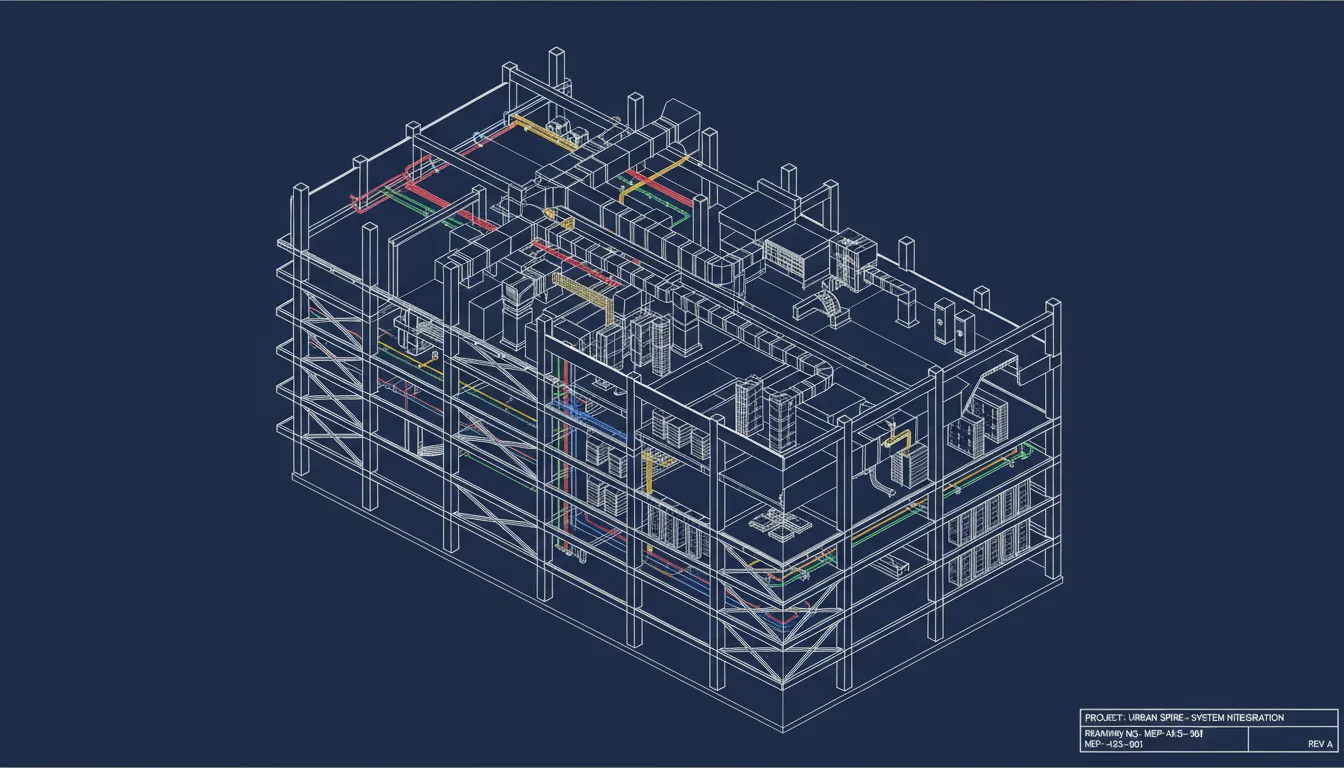
Beyond standard drafting, programs like Revit for BIM (Building Information Modeling) are becoming mandatory in the Australian construction industry. These tools allow different types of engineers—structural, electrical, and plumbing—to work on a single, unified model.
3. Numerical Computation: Wolfram Mathematica
MATLAB is excellent for matrix manipulations, but Wolfram Mathematica shines when it comes to symbolic math and complex calculus. For students involved in heavy research or theoretical physics, Mathematica offers a more intuitive way to handle algebraic computations. It provides a vast library of mathematical functions that help in solving differential equations and performing high-level data visualization.
4. Programming for Engineers: Python
Every modern engineer should have at least a basic grasp of Python. It has largely replaced older languages due to its readability and the massive number of libraries available for scientific computing, such as NumPy and SciPy. Python is excellent for automating repetitive tasks, such as cleaning up experimental data or running batch simulations. It is a flexible tool that serves as the “Swiss Army Knife” of the digital age.
5. Project Management: Trello and MS Project
Engineering is rarely a solo endeavor. Most of your university career will involve group projects that mimic real-world engineering firms. Managing deadlines, resources, and team communication is just as important as the technical work.
Tools Trello use a visual card system to track progress, while Microsoft Project is better for complex Gantt charts and resource allocation. Learning these early helps you avoid the last-minute rush and ensures your team stays on track.
6. Documentation and Version Control: GitHub
If your engineering discipline involves any level of coding or software development, GitHub is non-negotiable. It allows you to track changes in your code and collaborate with others without overwriting important work. Even for non-software engineers, understanding version control is useful for managing large-scale documentation and design iterations.
Developing a Professional Workflow
Simply having these programs installed on your laptop is not enough. You must develop a workflow that connects them. For example, you might use Python to process raw data, move that data into an analysis tool for simulation, and finally document your findings in a professional report.
Australian universities emphasize the “Washington Accord” standards, which require students to demonstrate a high level of technical competency. This means your assignments must reflect an understanding of professional-grade software. If the technical load becomes too heavy, leaning on expert resources can help you maintain your GPA while you build these practical skills.
Why Breadth Matters in the Australian Market
Employers in Sydney, Melbourne, and Perth are looking for “T-shaped” individuals. This means you have deep knowledge in one area but a broad understanding of several others. An engineer who knows how to code, manage a project, and perform a structural simulation is much more valuable than one who only knows how to draw in 2D.
Investing time in these tools now will pay dividends when you enter the workforce. It turns you from a student who follows instructions into a professional who solves problems.
Conclusion
The journey through an engineering degree is a marathon, not a sprint. The software tools mentioned here are meant to empower you, not overwhelm you. Start by picking one—perhaps Python or a project management tool—and integrate it into your daily study routine.
Remember, the goal of engineering is to use technology to improve the world. By mastering these digital resources, you are setting yourself up to be a leader in the next generation of Australian innovation.