

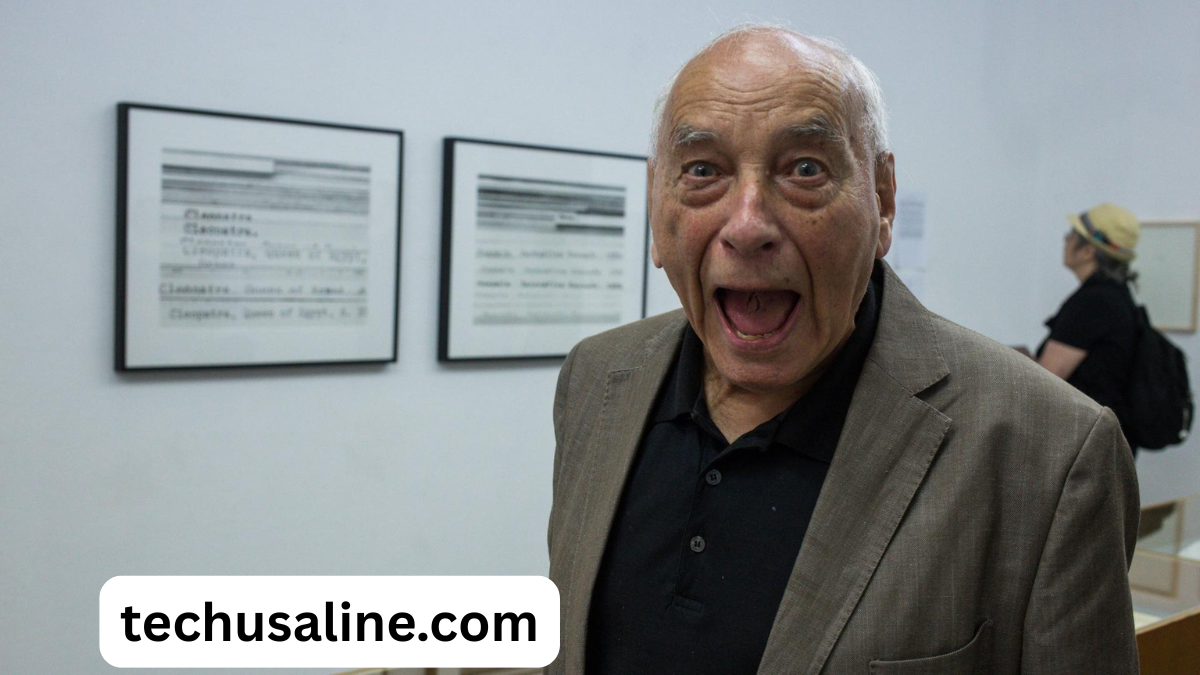
Eugen Gomringer is widely recognized as the father of concrete poetry, a literary movement that challenged traditional forms and reshaped how we perceive language on the page. Unlike conventional poetry, which relies heavily on rhythm, rhyme, and narrative, concrete poetry emphasizes visual structure, spatial arrangement, and minimalistic expression. Eugen Gomringer’s work blurred the line between words and visual art, turning poetry into an experience that could be both seen and read. His innovative approach invited readers to interact with text differently, interpreting meaning through both form and content.
Concrete poetry was more than a stylistic experiment for Eugen Gomringer; it was a philosophy. He believed that language could convey emotion and thought not only through meaning but also through appearance. By carefully arranging words on a page, Gomringer created pieces that were as visually striking as they were intellectually engaging. This approach offered a fresh way to communicate, where the white space surrounding words was just as significant as the words themselves. In essence, he transformed poetry into a multidimensional form of expression.
This article aims to provide a comprehensive look at Eugen Gomringer’s life, work, and lasting influence. We will explore his early years, his role in developing concrete poetry, his most notable works, his philosophy, and his global impact. Additionally, practical insights for poets and readers will show how Gomringer’s techniques continue to inspire creativity today. By the end, you will have a deeper understanding of why Eugen Gomringer’s minimalist yet powerful approach to poetry remains relevant in modern literature.
Early Life and Background
Eugen Gomringer was born in 1925 in Cachuela Esperanza, Bolivia, to a German family. His early life was marked by exposure to multiple cultures, which later influenced his poetic vision. Moving to Germany at a young age, Eugen Gomringer immersed himself in European literary traditions while retaining a broader perspective shaped by his South American upbringing. This cross-cultural experience provided fertile ground for innovation, allowing him to combine precision, simplicity, and philosophical depth in his writing.
Education played a critical role in shaping Eugen Gomringer’s approach to poetry. He studied philosophy, literature, and linguistics, which provided him with tools to explore language beyond conventional narrative structures. These academic pursuits encouraged him to experiment with form, challenging the boundaries between text and visual space. It was during these formative years that he became interested in minimalism and abstract expression, both of which would later become hallmarks of his poetic style.
Eugen Gomringer’s early exposure to multiple languages also influenced his approach to concrete poetry. He recognized that words could convey meaning through their arrangement, rhythm, and visual impact, regardless of semantic content. This insight became central to his philosophy of poetry, emphasizing clarity, economy of language, and spatial composition. These foundational experiences set the stage for a career that would redefine modern poetry and inspire generations of artists worldwide.
Understanding Concrete Poetry
Concrete poetry is an avant-garde form where the arrangement of words on the page carries as much meaning as the words themselves. Eugen Gomringer was a pioneer of this movement, exploring how spatial organization, repetition, and typographic choices could transform text into a visual and intellectual experience. Unlike traditional poetry, which focuses primarily on lyrical flow or narrative, concrete poetry engages readers by making the page itself part of the artwork.
Eugen Gomringer emphasized minimalism and simplicity in his work. Words are carefully selected and placed to create rhythm, structure, and visual impact. For example, his famous poem “Avenidas” uses repetition and alignment to generate a sense of movement and openness, demonstrating how the visual arrangement can evoke emotion. By stripping language down to its essential elements, he invited readers to engage with poetry in a direct and immediate way, relying on perception rather than narrative explanation.
The movement also challenges conventional ideas of authorship and interpretation. In concrete poetry, the reader’s perception completes the work. The spatial placement of words invites interpretation, making each reading experience unique. Eugen Gomringer’s approach demonstrates that poetry can exist as a dynamic interplay between text, form, and reader, opening new possibilities for creativity. Through this lens, language becomes both message and medium, and the blank space on the page becomes an integral part of expression.
Major Works of Eugen Gomringer
Eugen Gomringer’s body of work is both prolific and influential, encompassing dozens of collections and countless individual poems. Some of his most celebrated works include “Avenidas”, “Silencio”, and “El Árbol”. Each exemplifies his approach to concrete poetry, using precise placement, minimal language, and careful repetition to convey meaning. These works often explore themes of communication, perception, and human experience, proving that minimalism does not equate to simplicity in thought or emotion.
“Avenidas” is particularly notable for its use of repetition and linear alignment to evoke a sense of movement and continuity. The words themselves are simple, but their arrangement transforms them into a visual metaphor for pathways, choices, or life’s journey. Similarly, “Silencio” uses spacing and placement to create a meditative, reflective experience, showing how concrete poetry can evoke emotion without narrative storytelling. These pieces exemplify Eugen Gomringer’s belief that poetry is not just about words but about how they occupy space.
Beyond individual poems, Gomringer’s collections helped establish concrete poetry as a recognized literary movement. His works have been translated into multiple languages and exhibited internationally, influencing poets, visual artists, and designers. Through these contributions, Gomringer’s creative vision extended beyond literature, demonstrating how poetry could intersect with art, architecture, and cultural discourse. His works continue to inspire those seeking to explore the boundaries of language and visual expression.
Philosophy and Poetic Style
Gomringer’s poetic philosophy revolves around minimalism, clarity, and the integration of form and content. He viewed language as a tool to create thought, emotion, and visual impact simultaneously. In his approach, every word, space, and line is intentional, reflecting a belief that less can often convey more. This philosophy allowed him to strip away unnecessary complexity, focusing on the essence of expression.
A key element of his style is the use of white space as an active component of poetry. By controlling the placement of words and the surrounding emptiness, Gomringer encouraged readers to engage visually and intellectually with the text. This emphasis on spatial design distinguishes his work from traditional poetry, where meaning is primarily conveyed through sequence and syntax. His poems are often seen as exercises in balance and rhythm, requiring careful attention to both visual and linguistic structure.
Cultural and philosophical ideas also shaped his style. Influences from semiotics, linguistics, and abstract art are evident in his work, reflecting his belief that language is a system of signs capable of conveying multiple layers of meaning. By combining these influences with his minimalist aesthetic, Gomringer created a poetic approach that is both disciplined and open to interpretation, demonstrating that structure and freedom can coexist in literature.
Impact on Modern Literature and Art
Eugen Gomringer’s influence extends far beyond his own poetry. By pioneering concrete poetry, he opened new avenues for experimentation in both literature and visual art. Contemporary poets and artists draw on his techniques to explore the relationship between text and space, transforming the way words are perceived and interpreted. His work has also informed experimental typography, graphic design, and multimedia projects, showing the versatility of his minimalist vision.
Concrete poetry as a movement gained international recognition largely due to Gomringer’s advocacy and exhibitions. He collaborated with artists, educators, and institutions to promote the idea that poetry could be a visual as well as a literary experience. This cross-disciplinary approach inspired subsequent generations to question conventional boundaries between art forms, resulting in innovative installations, digital projects, and collaborative works that reflect his influence.
Educational programs and literary workshops frequently study Gomringer’s methods, emphasizing the importance of simplicity, intentionality, and spatial awareness. Students learn to see words not just as carriers of meaning but as visual and structural elements. Through these contributions, Gomringer’s work continues to shape the evolution of literature, influencing both the theory and practice of poetic creation on a global scale.
Controversies and Criticism
Despite his acclaim, Gomringer’s work has faced criticism and debate. Some literary critics argue that concrete poetry prioritizes visual aesthetics over traditional literary qualities like narrative depth or emotional resonance. They question whether such minimalistic arrangements can truly constitute poetry or if they verge on design exercises. Gomringer, however, maintained that poetry should engage both intellect and perception, challenging conventional definitions of art.
Another controversy involved public reception and recognition. While his works were celebrated in avant-garde circles, mainstream audiences initially struggled to appreciate the minimalist and abstract nature of his poetry. Misinterpretations and dismissals as overly simplistic occasionally overshadowed his innovations. Over time, however, wider understanding of his philosophy and technique led to increased recognition of the depth and rigor underlying his approach.
Despite these debates, Gomringer’s contributions remain undisputed in their influence. Criticism has often prompted dialogue about the boundaries of literature, encouraging readers and writers to reconsider assumptions about poetry, meaning, and form. In this way, even controversy has played a role in solidifying his legacy and promoting greater awareness of concrete poetry as a legitimate and transformative art form.
Legacy and Recognition
Eugen Gomringer has received numerous awards and honors, recognizing his contributions to literature and art. His work is included in major literary anthologies, and several institutions have hosted exhibitions dedicated to his poetry. His influence is visible in contemporary literary movements, experimental typography, and cross-disciplinary artistic projects worldwide.
Beyond accolades, Gomringer’s legacy lies in his enduring impact on creative thought. His approach demonstrated that poetry could be visual, conceptual, and minimalist without losing expressive power. By redefining the role of words on the page, he inspired generations of poets, artists, and designers to explore new dimensions of creativity. His works continue to be studied, adapted, and exhibited, ensuring that his vision remains alive in modern literary and artistic discourse.
Through his philosophy and innovations, Gomringer showed that minimalism and clarity could convey profound meaning. His legacy is a testament to the power of experimentation, precision, and thoughtful engagement with language, reminding us that poetry is not just read but experienced.
Practical Insights for Aspiring Poets
Aspiring poets can learn much from Gomringer’s techniques. First, minimalism is a tool, not a limitation. By carefully choosing words and focusing on spatial composition, poets can create impactful work without relying on elaborate narrative or ornamentation. Observing how Gomringer manipulates repetition, alignment, and white space can provide a roadmap for developing unique and visually compelling poetry.
Second, experimentation is key. Concrete poetry encourages writers to view the page as a canvas, exploring unconventional layouts, typographic choices, and visual metaphors. Exercises in arranging a few words differently can reveal new interpretations and emotional effects. These practices help poets expand their creativity, blending linguistic and visual thinking.
Finally, understanding the philosophy behind Gomringer’s work enhances technical skill. His emphasis on clarity, intentionality, and engagement with perception provides a foundation for thoughtful experimentation. By combining theory with practice, aspiring poets can develop a style that is both disciplined and expressive, reflecting the timeless principles demonstrated in Gomringer’s innovative approach.
Conclusion
Eugen Gomringer’s work transformed poetry by merging language with visual design, emphasizing minimalism, clarity, and reader engagement. His pioneering contributions to concrete poetry challenged conventional literary norms, inspiring generations of poets, artists, and designers worldwide. Through his innovative use of space, repetition, and visual composition, Gomringer demonstrated that poetry could be experienced as much as it could be read.
His legacy endures in contemporary literature, art, and education, proving the timeless relevance of his approach. Beyond accolades and exhibitions, Gomringer’s philosophy continues to guide poets in exploring the intersection of form and meaning. Minimalist yet powerful, his work shows that simplicity can carry profound depth, inviting readers to see, feel, and interpret language in new ways.
FAQs
Who is Eugen Gomringer and why is he important?
Eugen Gomringer is considered the father of concrete poetry, known for blending language and visual design to create innovative literary experiences.
What is concrete poetry, and how did Gomringer contribute to it?
Concrete poetry emphasizes the visual arrangement of words. Gomringer pioneered this movement, transforming text into a visual and intellectual art form.
What are some of Eugen Gomringer’s most famous works?
Notable works include “Avenidas”, “Silencio”, and “El Árbol”, which demonstrate his minimalist, visually driven poetic style.
How has Gomringer influenced modern literature and art?
His techniques have inspired poets, visual artists, and designers, encouraging experimentation with language, space, and visual storytelling.
Where can I read Eugen Gomringer’s poems today?
His works are available in published collections, literary anthologies, and online resources dedicated to concrete poetry.
Are there any criticisms of his poetic style?
Critics argue that concrete poetry can prioritize visual form over narrative or emotional depth, but Gomringer’s work is widely recognized for its innovation.
How can aspiring poets learn from Gomringer’s techniques?
Poets can practice minimalism, explore spatial arrangement, and study his philosophy of clarity and intentionality to enhance their creative expression.
Also Read: tahmel hinds